Linked.Archi ADMIT Design Forces Ontology
Release: 2020-07-27
- Modified on: 2026-05-02
- This version:
- https://meta.linked.archi/admit/onto/0.1.0#
- Revision:
- 0.1.0
- Issued on:
- 2020-07-27
- Authors:
- Kalin Maldzhanski
- Publisher:
- Linked.Archi
- See also:
- https://www.infoq.com/articles/admit-architecture-framework/
- Download serialization:




- License:

- Visualization:

- Cite as:
- Kalin Maldzhanski. Linked.Archi ADMIT Design Forces Ontology. Revision: 0.1.0. Retrieved from: https://meta.linked.archi/admit/onto/0.1.0#
Linked.Archi ADMIT Design Forces Ontology: Overview back to ToC
This ontology has the following classes and properties.Classes
- Aestheticism Force
- Business Force
- Change Force
- Channel Force
- Constraint/Environment Force
- Content Force
- Cost Force
- Enterprise Force
- Failure Force
- Future Force
- Implementation/Pattern Force
- Infrastructure Force
- Integration Force
- Network Force
- Operation Force
- Platform Force
- Process Force
- Security Force
- Simplicity Force
- Storage Force
Annotation Properties
Linked.Archi ADMIT Design Forces Ontology: Description back to ToC
The ADMIT Design Forces Ontology contains the 20 ADMIT architecture design forces as OWL classes extending ad:Force. This is not an official IASA document.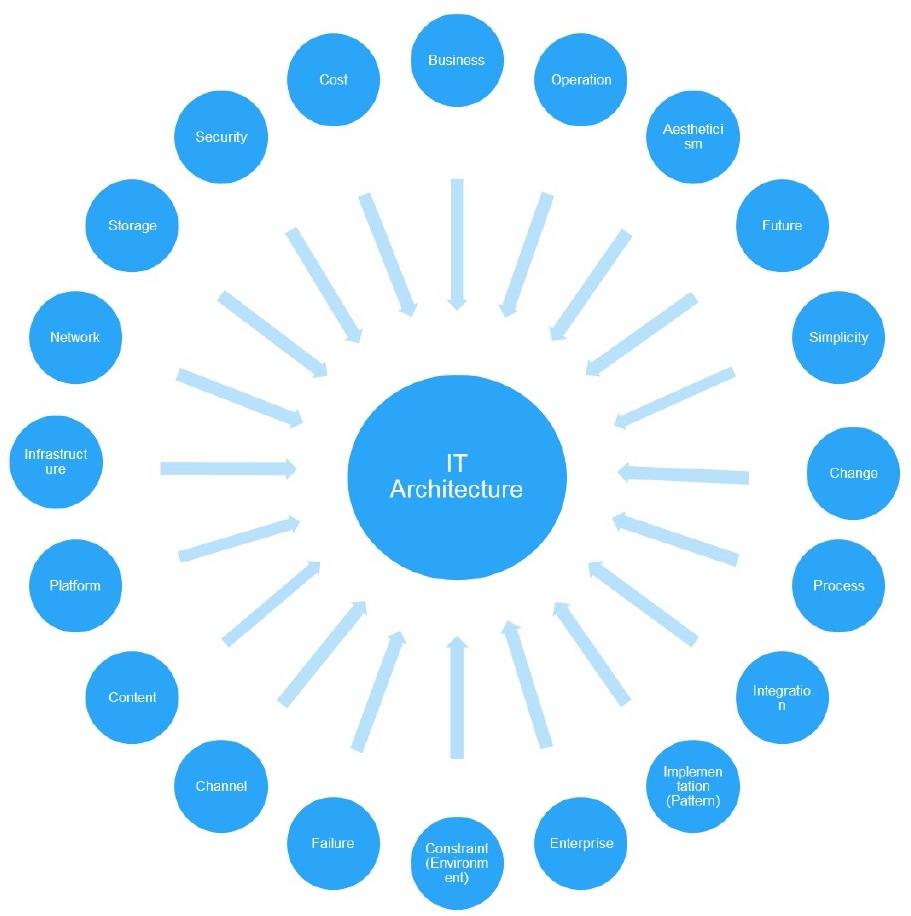
Cross-reference for Linked.Archi ADMIT Design Forces Ontology classes, object properties and data properties back to ToC
This section provides details for each class and property defined by Linked.Archi ADMIT Design Forces Ontology.Classes
- Aestheticism Force
- Business Force
- Change Force
- Channel Force
- Constraint/Environment Force
- Content Force
- Cost Force
- Enterprise Force
- Failure Force
- Future Force
- Implementation/Pattern Force
- Infrastructure Force
- Integration Force
- Network Force
- Operation Force
- Platform Force
- Process Force
- Security Force
- Simplicity Force
- Storage Force
Aestheticism Forcec back to ToC or Class ToC
IRI: https://meta.linked.archi/admit/onto#AestheticismForce
- has super-classes
- force c
Business Forcec back to ToC or Class ToC
IRI: https://meta.linked.archi/admit/onto#BusinessForce
- has super-classes
- force c
Change Forcec back to ToC or Class ToC
IRI: https://meta.linked.archi/admit/onto#ChangeForce
- has super-classes
- force c
Channel Forcec back to ToC or Class ToC
IRI: https://meta.linked.archi/admit/onto#ChannelForce
- has super-classes
- force c
Constraint/Environment Forcec back to ToC or Class ToC
IRI: https://meta.linked.archi/admit/onto#ConstraintEnvironmentForce
- has super-classes
- force c
Content Forcec back to ToC or Class ToC
IRI: https://meta.linked.archi/admit/onto#ContentForce
- has super-classes
- force c
Cost Forcec back to ToC or Class ToC
IRI: https://meta.linked.archi/admit/onto#CostForce
- has super-classes
- force c
Enterprise Forcec back to ToC or Class ToC
IRI: https://meta.linked.archi/admit/onto#EnterpriseForce
- has super-classes
- force c
Failure Forcec back to ToC or Class ToC
IRI: https://meta.linked.archi/admit/onto#FailureForce
- has super-classes
- force c
Future Forcec back to ToC or Class ToC
IRI: https://meta.linked.archi/admit/onto#FutureForce
- has super-classes
- force c
Implementation/Pattern Forcec back to ToC or Class ToC
IRI: https://meta.linked.archi/admit/onto#ImplementationPatternForce
- has super-classes
- force c
Infrastructure Forcec back to ToC or Class ToC
IRI: https://meta.linked.archi/admit/onto#InfrastructureForce
- has super-classes
- force c
Integration Forcec back to ToC or Class ToC
IRI: https://meta.linked.archi/admit/onto#IntegrationForce
- has super-classes
- force c
Network Forcec back to ToC or Class ToC
IRI: https://meta.linked.archi/admit/onto#NetworkForce
- has super-classes
- force c
Operation Forcec back to ToC or Class ToC
IRI: https://meta.linked.archi/admit/onto#OperationForce
- has super-classes
- force c
Platform Forcec back to ToC or Class ToC
IRI: https://meta.linked.archi/admit/onto#PlatformForce
- has super-classes
- force c
Process Forcec back to ToC or Class ToC
IRI: https://meta.linked.archi/admit/onto#ProcessForce
- has super-classes
- force c
Security Forcec back to ToC or Class ToC
IRI: https://meta.linked.archi/admit/onto#SecurityForce
- has super-classes
- force c
Simplicity Forcec back to ToC or Class ToC
IRI: https://meta.linked.archi/admit/onto#SimplicityForce
- has super-classes
- force c
Storage Forcec back to ToC or Class ToC
IRI: https://meta.linked.archi/admit/onto#StorageForce
- has super-classes
- force c
Annotation Properties
- close match
- created
- creator
- definition
- description
- image
- issued
- modified
- pref label
- preferred namespace prefix
- preferred namespace uri
- publisher
- status
- title
- was derived from
close matchap back to ToC or Annotation Property ToC
IRI: http://www.w3.org/2004/02/skos/core#closeMatch
createdap back to ToC or Annotation Property ToC
IRI: http://purl.org/dc/terms/created
creatorap back to ToC or Annotation Property ToC
IRI: http://purl.org/dc/terms/creator
definitionap back to ToC or Annotation Property ToC
IRI: http://www.w3.org/2004/02/skos/core#definition
descriptionap back to ToC or Annotation Property ToC
IRI: http://purl.org/dc/terms/description
imageap back to ToC or Annotation Property ToC
IRI: http://schema.org/image
issuedap back to ToC or Annotation Property ToC
IRI: http://purl.org/dc/terms/issued
modifiedap back to ToC or Annotation Property ToC
IRI: http://purl.org/dc/terms/modified
pref labelap back to ToC or Annotation Property ToC
IRI: http://www.w3.org/2004/02/skos/core#prefLabel
preferred namespace prefixap back to ToC or Annotation Property ToC
IRI: http://purl.org/vocab/vann/preferredNamespacePrefix
preferred namespace uriap back to ToC or Annotation Property ToC
IRI: http://purl.org/vocab/vann/preferredNamespaceUri
publisherap back to ToC or Annotation Property ToC
IRI: http://purl.org/dc/terms/publisher
statusap back to ToC or Annotation Property ToC
IRI: http://purl.org/ontology/bibo/status
titleap back to ToC or Annotation Property ToC
IRI: http://purl.org/dc/terms/title
was derived fromap back to ToC or Annotation Property ToC
IRI: http://www.w3.org/ns/prov#wasDerivedFrom
Legend back to ToC
Acknowledgments back to ToC
The authors would like to thank Silvio Peroni for developing LODE, a Live OWL Documentation Environment, which is used for representing the Cross Referencing Section of this document and Daniel Garijo for developing Widoco, the program used to create the template used in this documentation.